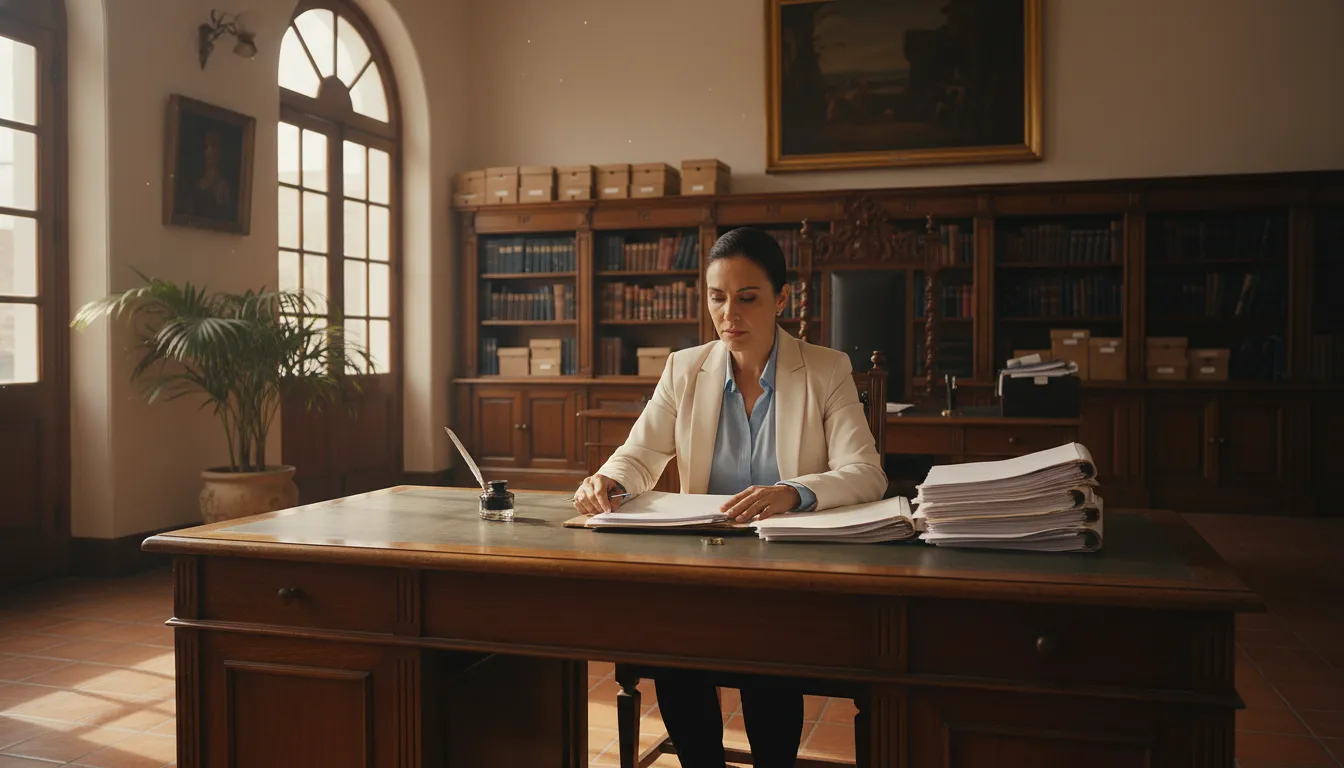
What If Your Spouse Simply Refuses to Divorce?
It happens more often than most people realize: one person has made a firm, final decision to end their marriage — but the other spouse refuses to cooperate, dodges the process entirely, or simply vanished years ago. Many people in Colombia — including foreign nationals married here — assume this means they are legally stuck. They are not.
Unilateral divorce in Colombia is a legally recognized process that allows one spouse to dissolve a marriage without the other's consent. It exists precisely because the law recognizes that a marriage cannot be used as a cage. But the process is not simple, and the details of how it's handled have direct consequences on financial outcomes, parenting arrangements, and how long the whole thing takes.
This article gives you the foundational knowledge you need to understand your situation — and to arrive at your legal consultation ready to make informed decisions.
What Is Unilateral Divorce in Colombia?
Colombian law distinguishes between two main types of divorce. The first — divorce by mutual agreement — can be handled at a notary's office when both spouses agree on all terms. The second — unilateral or contested divorce — is filed by one spouse before a family court judge, invoking specific legal grounds established in Article 154 of the Colombian Civil Code, as significantly reformed by Law 25 of 1992.
Because one party is initiating the divorce without the other's cooperation, this process is inherently judicial. It unfolds before a judge, allows for the other party to respond, and follows the procedural rules of the Colombian civil process code. Unlike a notarial divorce, a unilateral divorce cannot be resolved with a quick appointment and a few signatures.
The legal grounds (causales) for unilateral divorce cover a range of situations: serious failure to fulfill spousal or parental duties, extramarital relations, physical or psychological abuse, habitual intoxication or substance dependency, and extended de facto separation, among others. Each ground carries different evidentiary requirements — and choosing the right one for your specific circumstances is one of the most consequential early decisions in the entire process.
Not sure which legal ground applies to your situation? That's exactly the first question to answer with professional guidance. Contact us for a personalized consultation.
Why the Stakes Are Higher Than Most People Expect
People often focus exclusively on ending the marriage and underestimate the broader legal and financial implications of how the unilateral divorce in Colombia is conducted. The decisions made during this process have consequences that can last decades.
The marital property regime
Most marriages in Colombia automatically create a sociedad conyugal — a regime of shared assets that forms the moment the marriage is registered and must be formally liquidated upon divorce. What gets included in that liquidation, what gets excluded, and when the dissolution is timed can significantly affect what each spouse receives. Many people discover — too late — that they were entitled to assets they never claimed, or that they incorrectly assumed certain assets were exclusively theirs.
The "guilty spouse" principle
This is one of the most overlooked aspects of Colombian divorce law: when a divorce is granted based on fault-based grounds (such as abuse or infidelity), the spouse found to be at fault may forfeit certain rights — including the right to receive spousal support from the other party. Invoking the right legal ground isn't just a formality. It can have real, lasting financial consequences for both parties.
Children and custody
When minor children are involved, the unilateral divorce process cannot be cleanly separated from decisions about custody, visitation, and child support. Arrangements that seem acceptable at the time of divorce often become major sources of conflict later — and modifying them after the fact is significantly harder than getting them right from the beginning.
How the Process Works — In General Terms
A unilateral divorce in Colombia is filed before a family court judge in the jurisdiction of the marital domicile. The process moves through several phases: filing the complaint, notifying the other spouse, an evidentiary period, hearings, and ultimately a judicial decision. If the other spouse contests the divorce or any of its terms, the process becomes more complex and typically longer.
How long it takes depends on the complexity of the case, the workload of the specific court, and critically, whether the other party decides to actively oppose the process. A well-prepared, uncontested filing and a heavily litigated case with multiple hearings can differ dramatically in duration and cost.
Documentation requirements vary depending on the legal ground being invoked, whether children are involved, the nature of the shared assets, and the circumstances of each specific case. What we can say with certainty is that incomplete or improperly presented documentation is the single most common reason for delays, rejected filings, and unfavorable outcomes.
This is where having an experienced family law attorney makes a measurable difference — not just in the outcome, but in how the process feels to live through. Reach out to our team before filing anything.
Common Mistakes — And Their Real Consequences
In our practice in Medellín, we regularly see the same errors derail cases that could have been resolved efficiently. Understanding these pitfalls helps you appreciate why professional guidance matters at every stage.
1. Choosing the wrong legal ground
Each ground for unilateral divorce requires a different type of evidence. Someone who invokes de facto separation without being able to prove the minimum required time period, or who attempts to establish abuse without the right evidentiary foundation, starts the process at a disadvantage. Judges won't tell you which ground you should have used — that analysis must happen before the complaint is filed.
2. Notification problems
When the other spouse cannot be located — because they live abroad, are actively avoiding the process, or their whereabouts are unknown — Colombian law provides specific mechanisms to continue the proceedings. Many people don't know these exist and watch their cases stall indefinitely. Others try to shortcut notification procedures and risk having the final judgment challenged on procedural grounds. Either outcome is avoidable.
3. Ignoring the property liquidation
It is technically possible to finalize a divorce without simultaneously resolving the marital property liquidation. But doing so without a clear strategy about that liquidation often means negotiating from a weaker position later — when the urgency to resolve the marriage is gone, and so is much of the leverage. The marital property regime does not dissolve automatically with the divorce decree; it persists until formally liquidated.
4. Assuming de facto separation is the same as legal divorce
Many couples in Colombia have been living apart for years — separate households, separate finances, completely independent lives — yet never formalized their divorce. As long as the legal marriage bond exists, so do legal obligations, property rights, and inheritance implications. These can become very relevant, very quickly, in the event of a new relationship, a significant financial transaction, or a death in the family.
Frequently Asked Questions
Can I file for unilateral divorce if my spouse is abroad or unreachable?
Yes. Colombian procedural law includes mechanisms for proceeding when the other spouse cannot be located or is outside the country. However, the specific steps required to achieve a legally valid notification in these circumstances are technical and must be followed precisely — otherwise the judgment can be challenged after the fact. The right approach depends heavily on your specific situation and where your spouse is believed to be.
How long does a unilateral divorce in Colombia take?
There is no single answer. A well-prepared case with an uncontested respondent can move relatively quickly; a heavily litigated case can extend considerably longer. Court congestion in each city is also a real factor. What's consistent across cases is that a process built on solid preparation from day one moves faster and encounters fewer obstacles than one that requires corrections mid-stream.
What happens to shared property during a unilateral divorce?
The marital property regime dissolves upon divorce, but the actual division of assets is a separate legal process. The outcome depends on multiple variables: what was acquired before and during the marriage, whether prenuptial agreements (capitulaciones) exist, whether either spouse is found at fault, and how strategically each party approaches the negotiation. Every case is different, and the details matter significantly.
Do I need a lawyer for a unilateral divorce in Colombia?
Unlike a notarial mutual-consent divorce, a unilateral divorce is a judicial proceeding. Legal representation isn't just advisable — it's practically indispensable if you want to protect your rights, present your case correctly, and avoid the mistakes we've described above. The more relevant question is not whether to have a lawyer, but how early to start working with one.
Take the First Step With Confidence
Unilateral divorce in Colombia is a powerful legal tool — one that exists to protect people in exactly the situations we've described throughout this article. But like any legal mechanism, its effectiveness depends entirely on how it's used and who guides the process.
Understanding the framework is a starting point. What comes next is applying it to your specific case: identifying the right legal ground, building the evidentiary foundation, protecting your financial interests, and ensuring that any decisions affecting your children are made with full awareness of their long-term implications.
At Legal Diligence Medellín, we work with Colombian nationals and foreign residents alike through every stage of this process — from the first conversation to the final resolution. We know how these cases move, where the risks concentrate, and how to position your case for the best possible outcome.
Have questions about your case? Contact us for a personalized consultation. We'll assess your situation, explain your real options, and stand with you through every step of the process.